


The Hazardous Substances Transport Act (Wvgs) is the Dutch basic law for the transport of hazardous substances by land, by rail and over inland waterways. What you exactly have to do with a tank container is usually not specified in the law. The law determines who is allowed to make regulations and what they can regulate. The details are set out in lower regulations and in the ADR for road transport, the RID for rail transport and the ADN for inland navigation.
For a liquid chemicals shipper, that is the convenient order: first know what layer is involved, then the details. Below you will read about how law, decision, regulation and ADR fit together, what the Wvgs themselves regulate and what that means for transport in a tank container.
What the Wvgs covers and does not cover
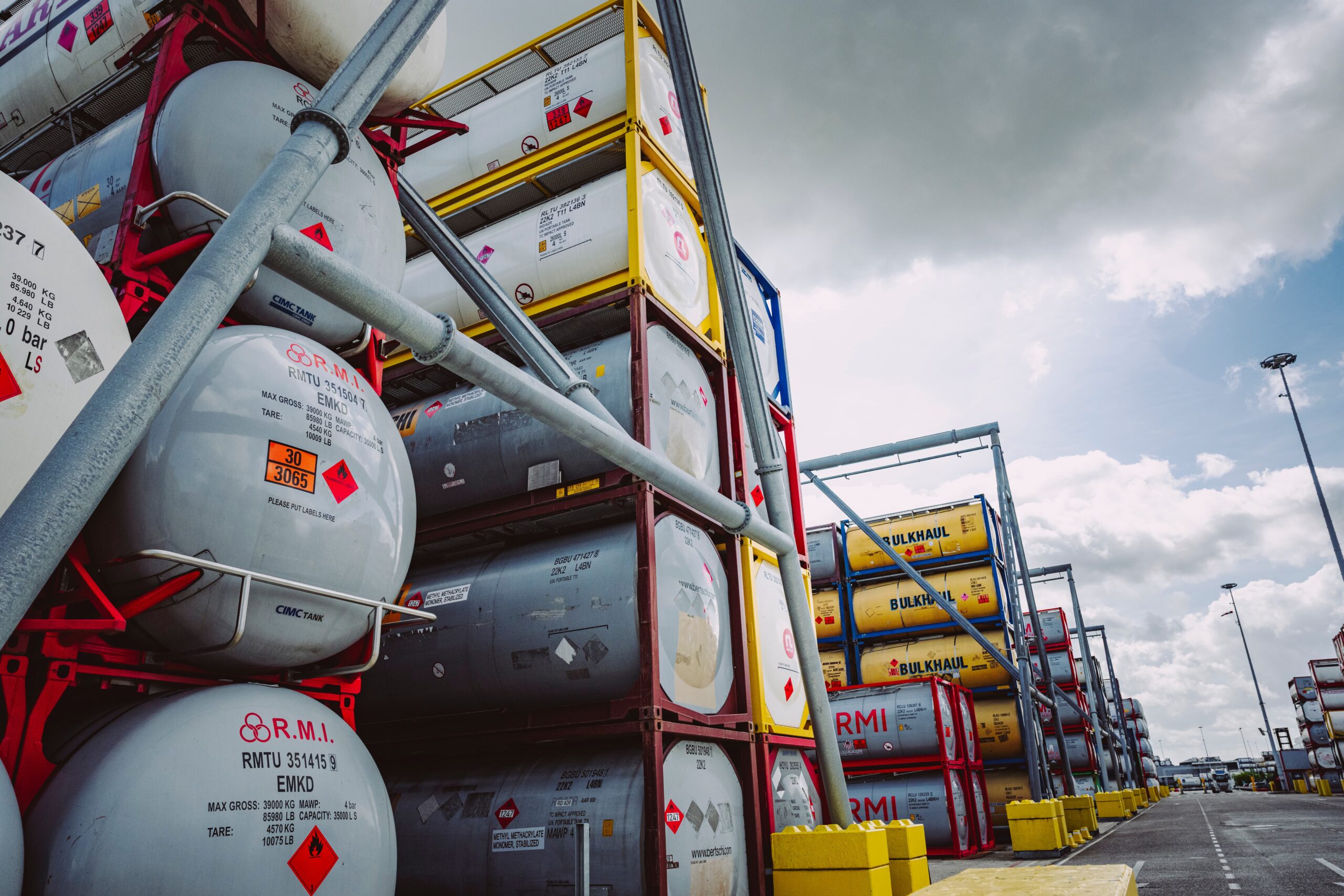
Article 2 of the Law on the transport of dangerous substances It lists the application area as the transport of dangerous substances by land, rail and inland waterways. The related activities are also included, such as loading, unloading, packaging and filling. This is important for tank containers, because filling and emptying are part of the chain.
Transport within a closed area is not covered, unless the public road is used. The law does not mention maritime transport in its scope of application. If your container is transported by ship after the truck or train, other rules apply for that part, in practice the IMDG Code. That is how RMI describes it on the page about ADR transport in tank containers.
From law to ADR: four layers
The law mainly states that rules may be established regarding which subjects. Article 6 mentions, among other things, the construction and inspection of vehicles, marking, packaging, training and certificates, tunnels, and prior notification. The details are contained in the layers below.
| Low | What she does |
|---|---|
| Law on the transport of dangerous substances | Provides the foundation and regulates, among other things, routes, the Basic Network, incident reporting, and exemptions |
| Decision on transport of dangerous substances | Defines ADR (road), ADN (river transport) and RID (railway) and allows the substances to be designated by ministerial regulation in accordance with those conventions (Articles 1 and 2) |
| Regulation on the transport of dangerous substances by land | Contains in Annex 1 the Dutch translation of Annexes A and B of the ADR, plus Dutch regulations such as tunnel categories and route restrictions |
| ADR, RID, ADN | The content per mode of transport: classification of the substance, tank, documents, vehicle and driver |
The texts are available on wetten.overheid.nl: the Decision on transport of dangerous substances and the Regulation on the transport of dangerous substances by land. The Dutch government publishes the ADR in Dutch, the edition ADR 2025 (Appendices A and B) are available online. Always check which edition and which appendix applies to your particular transport before booking.
What the Netherlands regulates itself, outside of the ADR
Part of the rules are Dutch and are stated in the law itself or in the regulations. For a chemical tanker, these are the points that you encounter in the planning:
- Routes. Article 19 stipulates that anyone transporting dangerous substances by road must avoid populated areas. Exceptions are made for loading and unloading and for situations without an alternative route.
- Tunnels. The Land Transport Scheme divides Dutch tunnels into categories C, D or E (article 3), indicated by the sign C22. According to the Dutch government the safety category of the tunnel determines which substances are allowed through.
- Basic network. The minister identifies roads, waterways and main rail lines that are important for this transport (Article 13) and, by ministerial regulation, risk floors are established along that network (Article 14). Rijkswaterstaat reports that this policy has been included in the law since April 1, 2015, and that the risk funds are reviewed at least every five years.
- Incidents. In the event of an accident, the 112 emergency call is made first. After that, the carrier and other involved parties report the accident as soon as possible to the Inspectorate for Living Environment and Transport (ILT). Article 47 imposes this reporting obligation on anyone who performs an action under Article 2, including those who load, unload, or fill, if there is a danger to public safety or may arise. Until the inspectorate has been able to assess the situation, further actions with the cargo are prohibited, except for what is necessary to prevent further harm.
- Exemptions. The minister may grant an exemption in special cases (Article 9). Entrepreneurs' Square Examples include: damaged packaging, or transport on slippery surfaces or less than 200 meters of visibility, for which the ILT grants an exemption.
The latter point can in practice be an ordinary winter day. For certain loads, transport on slippery roads or in poor visibility is not permitted, unless permission is granted. Please take this into account when scheduling tight delivery dates.
What you as a company need to have in place
Ondernemersplein lists the following points for those who transport hazardous substances by road:
- A driver with an ADR certificate (the basic ADR certificate, which can be obtained from the CBR). A co-driver who does not drive does not need a certificate, but does need an awareness course.
- An inspection by the RDW for certain vehicles, with an ADR inspection document that the driver has on hand.
- One or more safety advisers with a certificate for the road. Sometimes an exemption applies. The exemption is set out in paragraph 1.8.3.2 of Annex 1 (Article 12 of the Regulations on Transport by Land).
- Orange identification markings with the correct Kemler codes on each vehicle that transports hazardous materials.
The ILT controls transporters of dangerous substances and advises carriers. As a shipper, you rarely sit behind the wheel, but the law also looks at what you yourself do: filling, packaging and loading are acts within the meaning of Article 2. Who has which task, you can read in our article The role distribution between the shipper and the carrier in ADR transport.
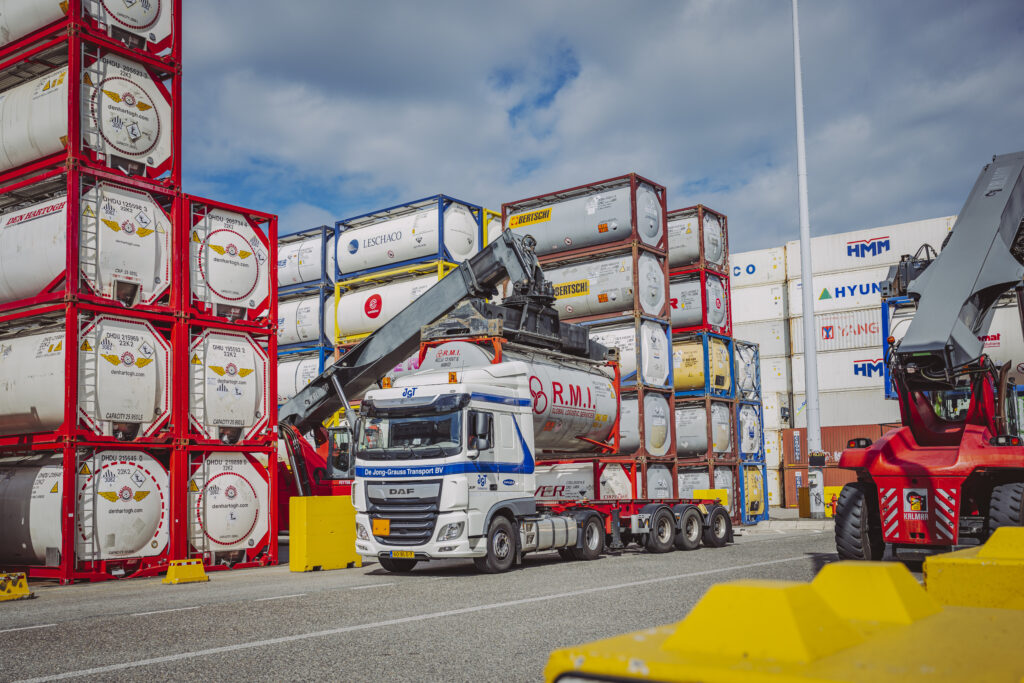
This is how it comes back in a transport with RMI
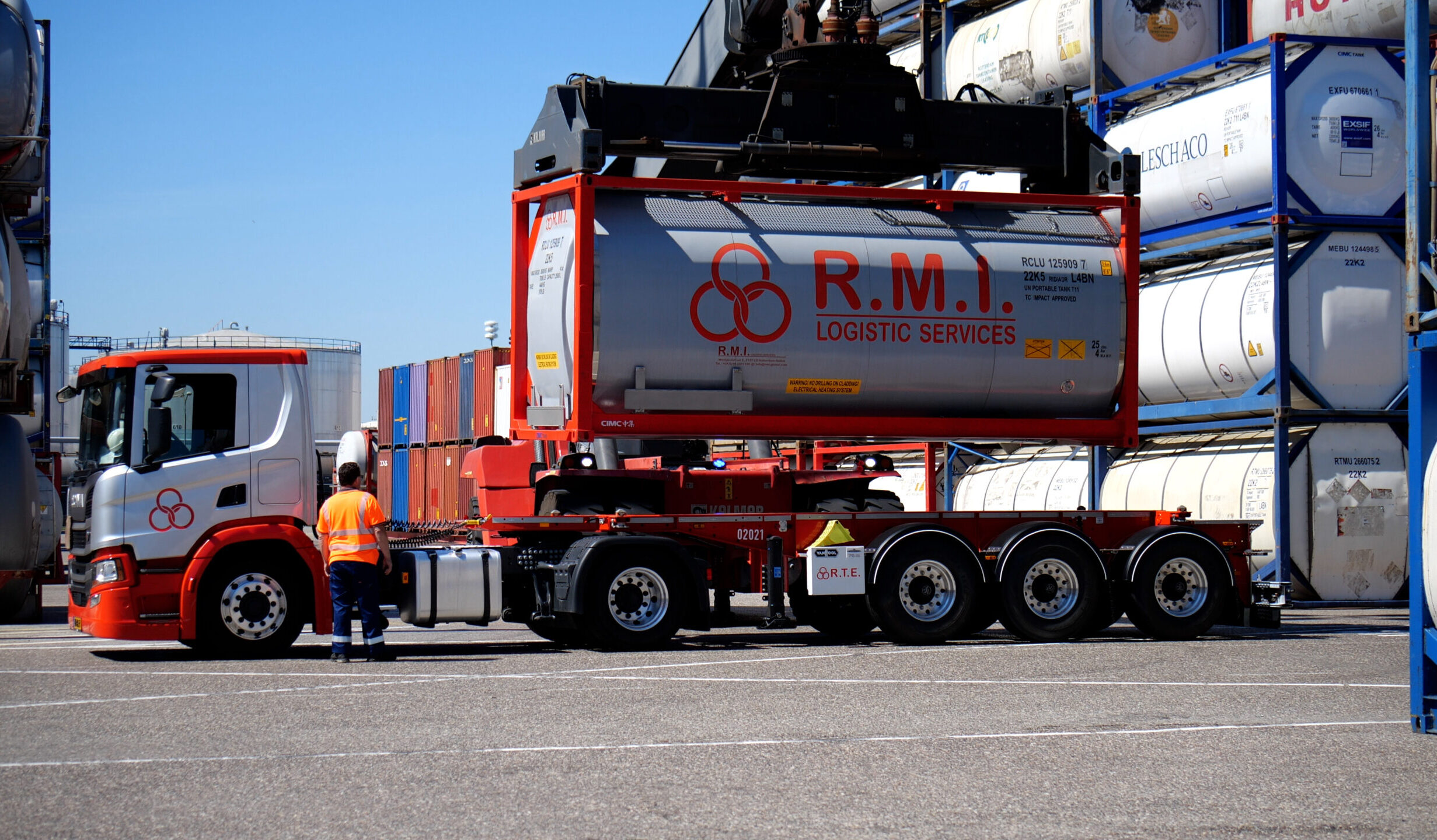
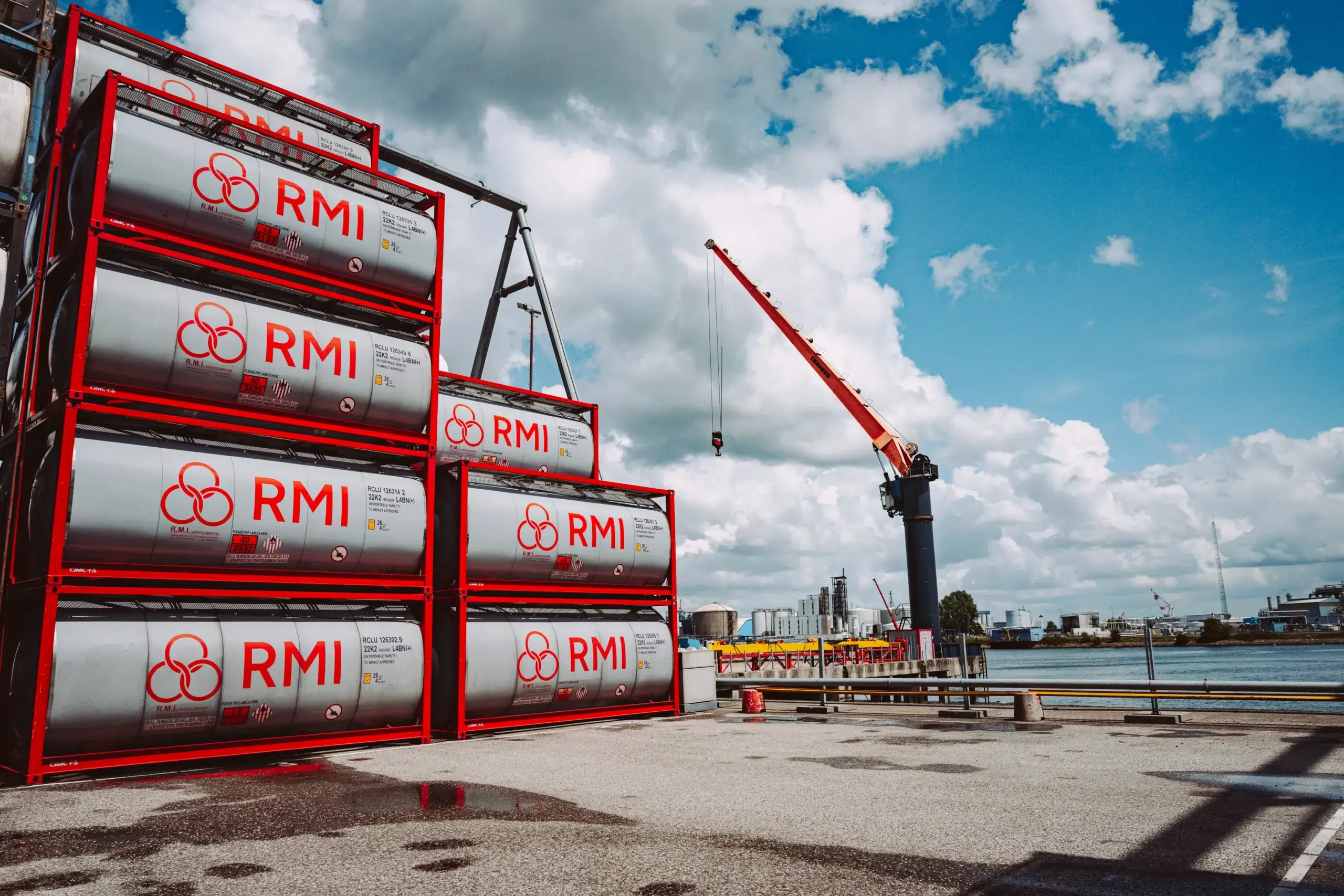
RMI transports liquid chemicals in tank containers throughout Europe, both dangerous (ADR) and non-hazardous. According to the page on ADR transport, there are more than 1,100 chemical tank containers, more than 18,000 transports in 2024, and a team that has been doing this since 1997. RMI has been SQAS-evaluated and participates in the Responsible Care program of CEFIC and ECTA. The head office is located in Rotterdam-Botlek.
RMI in figures
1.100+
chemical tank containers
18.000+
transportations in 2024
Since 1997
RMI transports chemicals in tank containers
That route is often intermodal. The truck travels to the train or ship and back from the terminal to the unloading location. The long stretch goes by rail, for example to Italy, Spain, the Czech Republic or Hungary, or by sea to destinations such as Finland, the United Kingdom, Portugal and Norway. There are separate rules for each route: the ADR for road transport, the RID for rail transport and the IMDG Code for shipping. RMI coordinates the route, the tank and the documentation accordingly and, where possible, uses its own inland terminal. When this combination makes sense, you’ll read in Intermodal transport with tank containers: when is it worth it?
Before submitting a quote, RMI requests the following information in advance:
- UN number, shipping name, class and packaging group, or confirmation that the product is not subject to the ADR;
- the safety information sheet;
- the charging and discharge temperature, and whether the product needs to remain warm during transport;
- the loading and unloading address, including loading times and requirements of the location;
- special requirements for the tank, such as a coating or heating system.
Which tank fits which product is stated in the article about it. Tank type, T-code and inspection for chemical transport. The RMI certificates can be found on the page Safety and compliance, and the offer for chemistry is up intermodal transport for chemical products.
Frequently asked questions about the Wvgs
What is the Hazardous Substances Transport Act?
The Wvgs is the Dutch law for the transport of dangerous substances by land, rail and inland waterways, including loading, unloading, packaging and filling. It provides the basis for the Decision on the transport of dangerous substances and the Regulations on the transport of dangerous substances by land.
Is the ADR the same as the Wvgs?
No. The ADR is the international agreement for road transport. The Wvgs is the Dutch law that applies that agreement through decision and regulation, and adds its own rules to it, such as routes and the Basic Network.
Who controls compliance?
The Inspectorate for the Environment and Transport is monitoring transport companies that transport hazardous materials and advising carriers, according to the Dutch government.
Does the Wvgs also apply to the second part of an intermodal transport?
The law focuses on transport by land, rail and inland waterways. For the maritime sector, separate rules apply, in practice the IMDG Code.
Would you like to discuss a tank container transport involving dangerous substances? Contact RMI, Or read more about it first intermodal transport. Statutory texts and pages from the Dutch government were consulted on November 19, 2026. Laws are being amended, so please check the current version at wetten.overheid.nl.